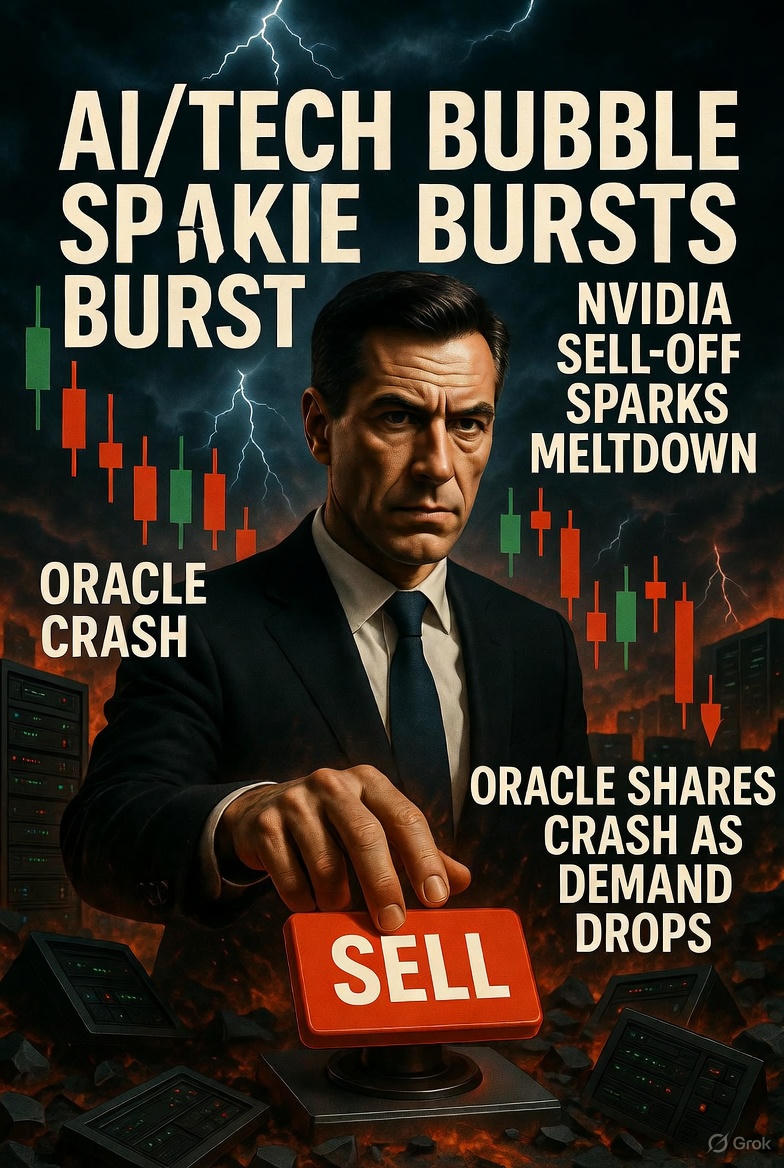
As we near the end of 2025, there’s a noticeable tension hanging over the stock market. The S&P 500 and Nasdaq have been flirting with record highs, largely thanks to the rapid advancements in artificial intelligence (AI) and related technologies. But behind this optimistic facade, a growing number of voices are asking: could the AI boom just be a speculative bubble about to pop? Recent market selloffs, expert insights, and echoes from history suggest that might indeed be the case. In this piece, we’ll delve into the signs indicating a possible AI/tech bubble burst, what it could mean for investors, and why it might be wise to start cutting back on some of those overpriced tech stocks before things get messy.
The Surge of AI Hype
The whole AI craze really kicked off with tools like ChatGPT hitting the scene in late 2022, sparking an investment frenzy. Companies like Nvidia—whose chips are crucial for powering AI models—saw their stock prices soar; Nvidia’s shares shot up by over 200% in 2023 alone and kept climbing into 2025 despite some ups and downs. Major players like Microsoft, Google (Alphabet), and Amazon threw billions into building out their AI capabilities, erecting massive data centers and snapping up startups left and right. Venture capitalists poured cash into the sector at record levels.
But here’s where things get tricky: this enthusiasm has led to some wild valuations. By December 2025, many AI-focused companies were sporting price-to-earnings ratios that rivaled those from the dot-com boom. Some hyperscalers in the AI space were trading at multiples of 50 times forward earnings or more—way higher than the broader market average of around 20 times. Even big names like OpenAI’s CEO and Alphabet’s executives have admitted there’s a sense of “irrational exuberance” going on. The Bank of England and the International Monetary Fund (IMF) have drawn direct parallels to the dot-com crash in 2000, warning about a potential “sharp correction” if expected returns don’t materialize.
One major concern is how far hype diverges from reality. Large language models (LLMs), which form the backbone of generative AI, seem to be hitting performance ceilings. As costs climb—training one advanced model can now run up to $100 million—improvements are getting harder to come by. Plus, not many consumers are ready to fork out money for premium AI features, leaving proprietary systems struggling to turn a profit. If venture capitalists start pulling back, we could see a wave of startup closures.
Recent Market Shaky Moments: A Red Flag?
December 2025 has been particularly eye-opening. A global selloff hit stocks hard, especially those tied to AI tech. Oracle, a key player in AI cloud services, saw its shares plummet by 2.66% in just one day—down 44% since September’s peak. CoreWeave wasn’t far behind; it dropped 8% in one day and is down about 60% from its July high. These declines highlight just how overextended some companies are: CoreWeave is wrestling with $3.7 billion in current debt and commitments totaling over $39 billion for future data center leases. A recent $2.25 billion convertible bond issuance further diluted shareholders and raised questions about financial stability amid all this growth.
Broader markets felt these shocks too; the Nasdaq Composite took a hit mid-month as fears around an AI bubble grew louder. The S&P 500 dipped slightly during key selloff days but still managed a decent year-to-date gain of about 16%. Interestingly enough, equal-weighted versions of the index saw slight rises, hinting at a shift away from tech giants toward sectors like materials or financials. Globally speaking, other markets reflected similar concerns: Japan’s Nikkei dropped by 1.56%, China’s CSI fell by 0.63%, and South Korea’s KOSPI declined by 2.24%.
It isn’t full-on panic mode just yet; investors are being selective about which stocks they’re selling while generally staying bullish on equities overall. Tesla and Nvidia even defied gravity on some days with gains of around 3.56% and 0.73%, respectively. Still, this kind of selective selling hints that folks are starting to question whether this tech-driven growth can keep going.
Learning from History: The Dot-Com Bust
History has some serious lessons for us here. The dot-com bubble back in the late ’90s saw internet stocks inflate based on grand promises that eventually led to a massive crash in 2000—trillions in value vanished practically overnight! Names like Pets.com became symbols of how hype can overshadow reality back then. Today’s narrative around AI feels eerily similar: huge investments in infrastructure (think data centers) mirror that bygone era’s fiber-optic cable overbuild which ended with bankruptcies when demand didn’t match expectations.
Oaktree Capital recently posed a blunt question: “Is It a Bubble?” They point out widespread concerns that America’s biggest companies might be propping up an illusion rather than solid growth prospects. Andy Wu from Harvard Business School notes that while Big Tech might weather this storm thanks to diversified revenue streams, smaller players are definitely at risk here too. If things go south, we might witness broader market corrections akin to previous cycles where the S&P could drop between 20-30%.
Beyond just numbers on balance sheets, there are societal implications too! If automation through AI leads to mass job displacement without creating new opportunities for everyone else, we could be looking at heightened income inequality—a real mess if you ask me! Governments need to step up, but if everything bursts suddenly? Well, fiscal constraints could limit what they can do.
Geopolitical Consequences: A Global Power Shift?
If this U.S.-centered AI bubble pops? It wouldn’t only hit American investors hard—it could shake up global tech dynamics entirely! U.S firms might find themselves squeezed financially leading them towards layoffs or shifting focus from consumer markets toward military contracts instead! Companies like Google and OpenAI have already started clinching Pentagon deals for military applications of their technology—a sign that defense spending is creeping into what was once mainly commercial territory.
Meanwhile, China stands poised to capitalize on this situation! With strong state-backed funding flowing into universities and small businesses alike plus hedge funds diving into practical applications using open-source models—they’re creating quite an ecosystem! While U.S companies struggle with financial volatility; Chinese firms could snag market share internationally through initiatives like their Digital Silk Road project—much like they’ve done previously in solar energy or electric vehicles!
On top of all that? Geopolitical tensions between the U.S and China may ramp up even more! New export controls on chips such as Nvidia’s H200 may backfire too; they could ultimately spur China’s independence when it comes to research & development efforts! Fragmentation in regulation would make international governance around AI challenging while leaving countries vulnerable if development lags behind others!
Time for Investors to Think About Selling?
So here’s your takeaway: The cracks in this AI/tech bubble are becoming more visible by the day! While Wall Street seems unfazed at present—the combination of crazy valuations alongside heavy debt loads coupled with underwhelming performance is raising red flags everywhere! Those recent selloffs? They’re likely just hints of what could come next—don’t wait until it’s too late!
Now might be a good time to reevaluate your positions in overpriced AI stocks! Diversifying into undervalued sectors such as financials or industrials—which seem more stable right now—is worth considering as well as looking at bonds or defensive strategies for protection against volatility ahead! Keep in mind though—bubbles don’t burst overnight—but when they finally do? The fallout can happen fast!
This isn’t personal investment advice—definitely consult someone who knows their stuff—but history shows that greed can blind us from seeing real risks lurking around us! As we close out 2025? Stay sharp about that AI hype train—it might save you from feeling regret down the line!